Showing posts with label signal transduction. Show all posts

mitogens

A Mitogen, or somatomedin, is any molecules that stimulates a cell to divide.

Most mitogens are proteins, and they stimulate signal transduction pathways that utilize mitogen activated protein kinases. Mitogens include cytokines, growth factors, hormones, neurotransmitters, cellular stress proteins, and cell adhesion ligands. For example, antigen stimulation of cell adhesion immunoglobulins triggers mitosis in B cells.

Mitogen activated protein kinases (MAP kinases) act as switch kinases that transmits information of increased intracellular tyrosine phosphorylation to that of serine/threonine phosporylation. MAPK-activated protein kinases (or MKs; formerly MAPKAP kinases) respond to mitogenic and stress stimuli through proline-directed phosphorylation and activation of the kinase domain by extracellular signal-regulated kinases 1 and 2 and p38 MAPKs.(ffta)

The signaling cascade is:
mitogen → MAPKK kinase (MAPKKK) → MAPK kinase (MAPKK)MAP kinase (MAPK) → signaling

Among the substrates of ERK are the members of the p90 ribosomal S6 kinase (RSK) family of serine/threonine kinases (10). RSK plays an active role in nuclear signaling by phosphorylating the cyclic AMP response element binding protein (CRE-binding protein, CREB) (33), c-Fos (5), and IB (27). Phosphorylation of Bad (3, 29) and C/EBPß (4) by RSK can protect cells from apoptosis. RSK has also been implicated in cell cycle regulation. RSK phosphorylates histone H3 (25), suggesting that RSK may regulate chromatin remodeling.[s-fft]

MAP kinases are also called ERKs for extracellular-signal regulated kinases, microtubule associated protein-2 kinase (MAP-2 kinase), myelin basic protein kinase (MBP kinase), ribosomal S6 protein kinase (RSK-kinase) and EGF receptor threonine kinase (ERT kinase). Maximal MAP kinase activity requires phosphorylation of both tyrosine and threonine residues. Activators of the extracellular-signal regulated kinase family (ERKs) of MAPKs include the mitogens, Ras [fft], polypeptide growth factors PDGF, CSF-1, IGF-1, EGF insulin, PMA.

Top

oncogenes

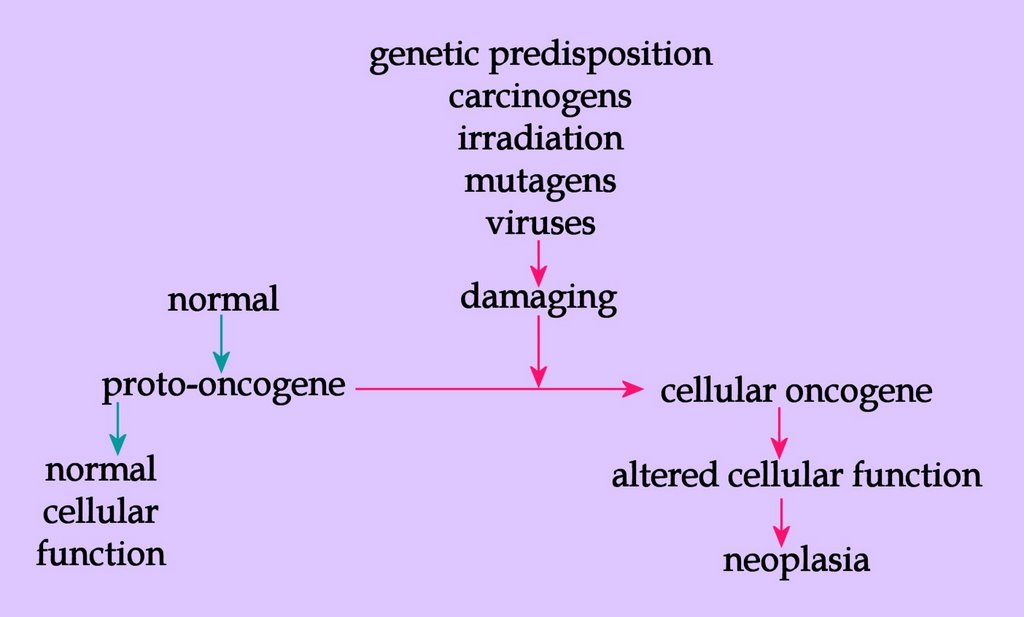
Alteration of a gene that normally controls cell growth can promote the uncontrolled growth characteristic of cancer. The normal form of the gene is termed a proto-oncogene, and the malignantly transformed gene is termed an oncogene.

Oncogenes: c-Fos : c-Jun : c-Myc : c-Sis : Ras : Rb :
Tumor Suppressor Genes: TP53

Damaged genes are passed down through the cancer cell line, and may be dominant or recessive genes:

Recessive: tumor suppressors, growth suppressors, recessive oncogenes or anti-oncogenes. Malignant transformation can result from genetic damage to genes coding for growth factors, growth factor receptors and/or proteins for signal transduction cascades.

Dominant: Proto-oncogenes participate in a variety of normal cellular functions, but have the potential to tranform into cellular oncogenes when damaged. Proto-oncogenes normally function in the various signal transduction cascades that regulate cell growth, proliferation and differentiation. Cellular proto-oncogenes resident in transforming retroviruses are designated as c- (cellular origin) as opposed to v- (retroviral origin). Oncogenes are malignantly transformed proto-oncogenes - table  Oncogenes Proto-oncogenes

14-3-3 proteins are a family of highly conserved cellular proteins that play key roles in the regulation of central physiological pathways. More than 200 14-3-3 target proteins have been identified, including proteins involved in mitogenic and cell survival signaling, cell cycle control and apoptosic cell death. Importantly, the involvement of 14-3-3 proteins in the regulation of various oncogenes and tumor suppressor genes points to a potential role in human cancer. Tzivion G, Gupta VS, Kaplun L, Balan V. 14-3-3 proteins as potential oncogenes. Semin Cancer Biol. 2006 Jun;16(3):203-13. Epub 2006 Apr 1.

Oncogenes: c-Fos : c-Jun : c-Myc : c-Sis : Ras : Rb :
Tumor Suppressor Genes: TP53
Proto-oncogene/oncogene families ● growth factor genesreceptor tyrosine kinases ( RTKs) ● membrane ssociated non-receptor tyrosine kinases (PTKs) ● G-protein coupled receptors (GPCRs) ● Serine/Threonine Kinases ● nuclear DNA-binding/transcription factors

¤ Cancer ¤ carcinogenesis ¤ oncogenes ¤ proliferation ¤ p53 ¤ retroviruses ¤ Rb ¤ signaling molecules ¤ tumor suppressors ¤ tumorigenic viruses ¤ site map ¤ Tables  Oncogenes Proto-oncogenes  Malignant Transformation  Regulatory Proteins Sequences  Cell signaling  Cell Adhesion  Apoptosis vs Necrosis  Apoptosis 

Top

signaling molecules

Eukaryotic cells coordinate cell growth with the availability of nutrients in their environment. Mutation of molecules involved in cell-growth signaling can result in the uncontrolled cellular proliferation that is characteristic of neoplasia. Signal transduction in cancer cells is a sophisticated process that involves receptor tyrosine kinases (RTKs) that eventually trigger multiple cytoplasmic kinases, which are often serine/threonine kinases.

A number of tumor models have identified several key cellular signaling pathways that work independently, in parallel, and/or through interconnections to promote cancer development. Three major signaling pathways that have been identified as playing important roles in cancer include the phosphatidyl inositol-3-kinase (PI3K)/AKT, protein kinase C (PKC) family, and mitogen-activated protein kinase (MAPK)/Ras signaling cascades.[]

ATM : ATR : DNA-PK : FRAP1 : kinases : MAPK : mTOR : Paks : PI-3-K : PIKK : PKC : Ras : receptor tyrosine kinases : serine/threonine kinases :

The mTOR protein kinase receives stimulatory signals from nutrients as well as Ras and phosphatidylinositol-3-OH kinase (PI(3)K) downstream from growth factors. Functioning as a critical growth-control node, mTOR is the 'mammalian target of rapamycin', a fungal derivative that halts protein synthesis by complexing with immunophilin FK-506 binding protein FKBP12 peptide prolyl cis/trans isomerase.

Officially termed FRAP1 for FK506 binding protein 12-rapamycin associated protein 1, mTOR is a serine/threonine kinase that regulates regulates translation and cell division. FRAP1 (mTOR) is an evolutionarily conserved member of the phosphoinositol kinase-related kinase (PIKK) family that includes DNA-PK, ATM, ATR and several other proteins. mTOR participates in the regulation of cell growth through initiation of gene translation in response to nutrients by integratating input from multiple upstream pathways, including growth factors, mitogens, leucine, insulin, and nutrients. mTOR initiates translation by activating the ribosomal p70S6k protein kinase (S6K1) and by inhibiting the eIF4E inhibitor 4E-BP1. FRAP1 is considered to be involved in numerous additional cellular functions including actin organization, membrane trafficking, secretion, protein degradation, protein kinase C signaling, ribosome biogenesis and tRNA synthesis. mTOR may contribute to the regulation of two pathways, referred to as TORC1 and TORC2 (for TOR Complex 1 and 2).

Components of the Ras and PI(3)K signalling pathways are mutated in most human cancers. The high frequency of mutations in these pathways suggests that the loss of growth-control checkpoints and the promotion of cell survival in nutrient-limited conditions may be an obligate event in carcinogenesis.[r]

p21-activated kinases (Paks) are serine/threonine kinases that function as downstream nodes oncogenic signalling pathways. Paks are well-known regulators of cytoskeletal remodelling and cell motility that promote cell proliferation, regulate apoptosis and accelerate mitosic abnormalities, resulting in tumorigenesis and cell invasiveness. Alterations in Pak expression have been detected in human tumours

Signal transduction in cancer cells is a sophisticated process that involves receptor tyrosine kinases (RTKs) that eventually trigger multiple cytoplasmic kinases, which are often serine/threonine kinases. A number of tumor models have identified several key cellular signaling pathways that work independently, in parallel, and/or through interconnections to promote cancer development. Three major signaling pathways that have been identified as playing important roles in cancer include the phosphatidyl inositol-3-kinase (PI3K)/AKT, protein kinase C (PKC) family, and mitogen-activated protein kinase (MAPK)/Ras signaling cascades. Faivre S, Djelloul S, Raymond E. New paradigms in anticancer therapy: targeting multiple signaling pathways with kinase inhibitors. Semin Oncol. 2006 Aug;33(4):407-20.

~ activator ~ cadherins ¤ Cancer ¤ carcinogenesis ~ cyclin-dependent kinases ~ cytokines ~ gene regulation ¤ genetic predispositon~ growth factors ¤ oncogenes ¤ malignant transformation ¤ mitogens ¤ mutagens ¤ neoplasia ¤ non-mutagenic carcinogens ¤ p53 ¤ proliferation ¤ proto-oncogenes ~ promoters ¤ Ras ¤ Rb ~ receptor tyrosine kinases ~ regulatory proteins ~ replication ~ repressor ~ response elements ~ retrotransposons ~ restriction enzmes ~ reverse transcriptase ~ Rho GTPase ~ ribosomes ~ serine/threonine kinases ¤ signaling molecules ~ silencers ¤ T-antigens ¤ TP53 ~ transcription ~ transcription factors ~ translation ¤ tumor antigens ¤ tumor suppressors ¤ tumorigenic viruses ¤ viral carcinogens ¤

Top